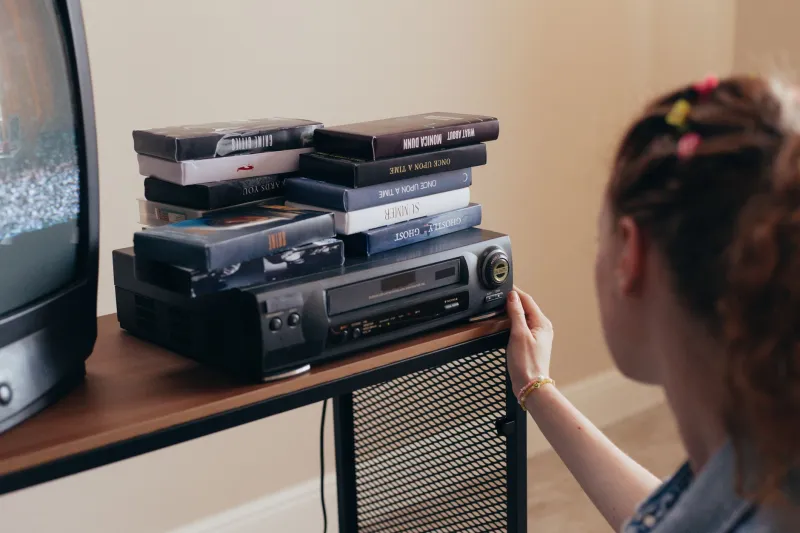
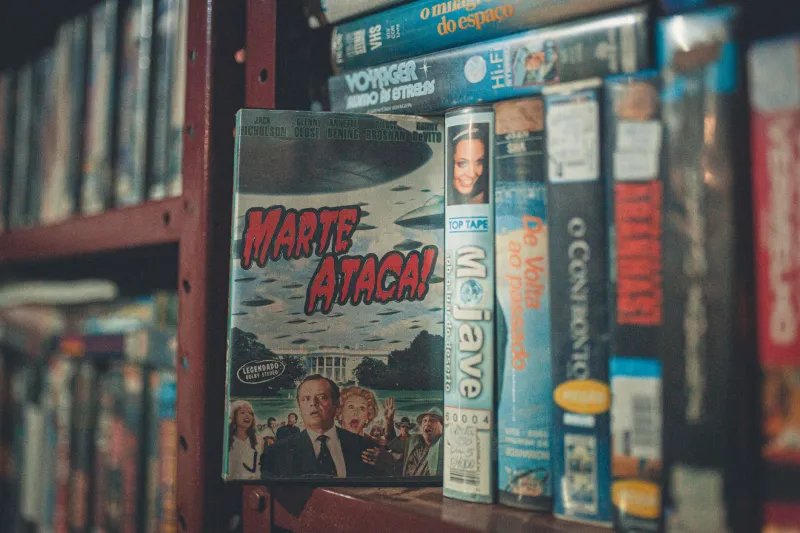
A Stranger Who Watched It: The Case for Handwritten Picks Over Algorithms
Photo: Federal Bureau of Investigation, Public domain, via Wikimedia Commons
There's a card taped to one of the shelves here in Asahikawa that I think about more than I probably should. It's written in blue ballpoint pen, the handwriting a little rushed at the edges, and it recommends a 2003 Japanese drama that most American streamers have never heard of. The card doesn't say 'Top Pick for You.' It doesn't say 'Trending Now.' It says, roughly translated, 'I cried at the end. Give it two nights.'
That's it. That's the whole pitch. And honestly? It works better than anything my streaming homepage has thrown at me in years.
The Problem With a Homepage That Knows You
If you're an American viewer, you already know the routine. You open Netflix or Max or Hulu, and the app greets you with a wall of rows: 'Top 10 in the U.S. Today,' 'Because You Watched Breaking Bad,' 'Critically Acclaimed Emotional Movies.' The personalization engine is genuinely impressive engineering. It's also completely hollow.
Here's the thing about an algorithm: it knows what you watched. It does not know what you felt. It can't tell you that a movie dragged in the middle but earns its ending so completely that you'll forgive everything. It can't warn you that a film is a great date-night pick but a terrible solo watch at 1 a.m. It only sees the data shadow you cast.
A handwritten card, on the other hand, has a person behind it. Someone stood in front of that shelf, thought about who might pick it up, and made a case.
What a Recommendation Card Actually Is
In Japanese rental shops — and Video World Asahikawa is very much in that tradition — staff picks aren't a marketing afterthought. They're a small genre of writing unto themselves. Cards get dated. Some get signed with a nickname. Regular customers start to recognize the handwriting of the clerk whose taste matches theirs, the way you might follow a certain critic whose opinions you've learned to trust or distrust.
That's the part the algorithm can't replicate: the relationship. When a card says 'the ending is divisive, but stick with it,' you're not just getting information. You're getting accountability. Someone put their name — or at least their pen — on the line.
Compare that to the 'Top 10 for You' row, which is really just an engagement-optimization engine wearing a friendly mask. It isn't trying to have taste. It's trying to keep you on the platform. Those are not the same goal.
Why We Keep Coming Back to the Card
There's a trust economics argument here. Every recommendation carries some risk for the recommender. A clerk who steers you wrong faces you at the counter next week. A streaming service that steers you wrong faces nothing at all. When the recommender has skin in the game, the recommendations get honest — sometimes honestly negative, which is a luxury no platform row will ever give you.
American audiences have started noticing this gap. There's a reason 'what should I watch' threads on Reddit outperform the apps' own suggestions, and why Letterboxd — a social network built entirely around humans telling other humans what they thought — keeps growing while the big platforms feel increasingly like slot machines.
What the Card Teaches Us
I don't think the answer is nostalgia for its own sake. Nobody's arguing we should go back to rewinding tapes. But there's a lesson in that blue-inked card: curation is a relationship, not a feature. The most valuable recommendation you can get comes from someone who watched the thing, cared about it, and told you the truth about it — including the flaws.
The next time an app tells you it has the perfect pick, remember the shelf in Asahikawa. A person cried at that ending. A person is asking you to give it two nights.
No algorithm has ever asked that of anyone.