Hunting for Gold: Why Japanese Retailers Are a Physical Media Collector's Best-Kept Secret
There's a certain satisfaction in holding a movie in your hands. Not scrolling past a thumbnail, not clicking a watchlist button — actually holding it. Feeling the weight of a steelbook case, cracking open a gatefold sleeve, reading liner notes that someone actually spent time writing. If that sounds nostalgic, you're not alone. But here's the thing: for a lot of collectors, it's not nostalgia. It's a full-on lifestyle, and Japan might be the best place on Earth to feed it.
At Video World Asahikawa, we've watched this trend build quietly for years. American enthusiasts reaching out, asking what's on our shelves, curious about what Japan carries that never makes it stateside. The answer, honestly, is a lot. And the collector community is finally starting to catch on.
Why Streaming Fatigue Is Fueling a Physical Media Comeback
Let's be real about what streaming has become. You open an app, spend fifteen minutes scrolling, watch half of something, and go to bed mildly dissatisfied. The algorithm knows what's popular. It does not know what you love. And more importantly, it has no memory. Films disappear from platforms without warning. Entire seasons of shows vanish overnight when licensing deals expire. You don't own anything — you're renting access to a rotating library someone else controls.
Physical media doesn't work like that. A Blu-ray you bought in 2015 still plays in 2025. Nobody can revoke it. Nobody can re-edit it for a new market and push the update to your shelf. What you bought is what you keep. For a generation that grew up being told digital was the future, the permanence of a physical disc has started to feel almost radical.
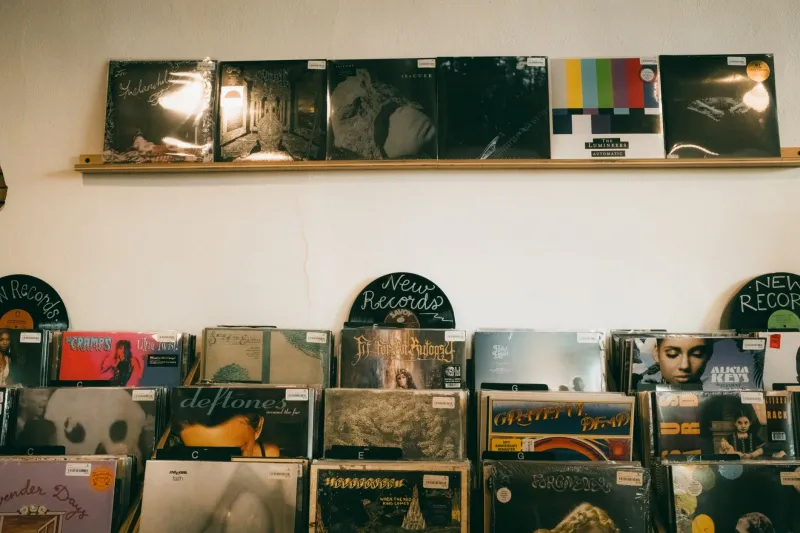
This is the headspace a lot of American collectors are in right now, and it's pushing them to seek out physical releases with the same energy record collectors bring to crate digging.
What Makes Japanese Releases Different
Here's where things get genuinely interesting for collectors. Japan has a long-standing culture of premium physical media releases that goes well beyond what most American retailers stock. The attention to packaging, the inclusion of supplementary materials, the print runs — all of it operates at a different level.
Take steelbooks, for example. While US retailers carry them, the designs often differ between regions. Japanese steelbook variants sometimes feature artwork pulled directly from original theatrical posters, or alternate illustrations commissioned specifically for the domestic market. For a collector who wants every version of a film they love, the Japanese edition is frequently the most visually distinctive one in the set.
Then there are the limited edition box sets. Japanese publishers — both for film and anime — have a habit of releasing collector's editions that bundle physical artbooks, postcards, mini soundtracks, and fabric inserts into a single package. These aren't afterthoughts. They're designed with the collector in mind from the ground up. An American equivalent might include a digital code and a slipcover. A Japanese equivalent might include an 80-page illustrated companion book and a set of lobby card reproductions.
Criterion Collection releases are another area where Japan offers something distinct. While Criterion is an American label, certain titles in their catalog have been released in Japan through licensing arrangements that produced alternate packaging, different supplemental content, or unique regional cuts. Collectors who track these variations obsessively — and there are a lot of them — know that the Japanese pressing can be the definitive one for specific films.
Region Locking and the Hunt for Exclusives
Region coding has always been a point of friction in the physical media world, but collectors have long since figured out how to work around it. Region-free Blu-ray players are widely available, and for serious enthusiasts, owning one is just part of the setup. Once you've got that sorted, the world of region-locked Japanese releases opens up considerably.
Certain anime films and television series receive Blu-ray releases in Japan that simply don't exist in the US market — or that arrive stateside years later in stripped-down editions. Studio Ghibli releases are a classic example: the Japanese domestic pressings have historically been the most complete versions, with supplementary materials that didn't make it into international editions. Collectors in the US who want the full experience have learned to source directly from Japan.
Beyond anime, live-action Japanese cinema often receives premium domestic treatment that Western distributors don't replicate. Directors who are household names in Japan — and increasingly recognized in the US — have back catalogs available in beautiful domestic pressings that never crossed the Pacific in physical form.
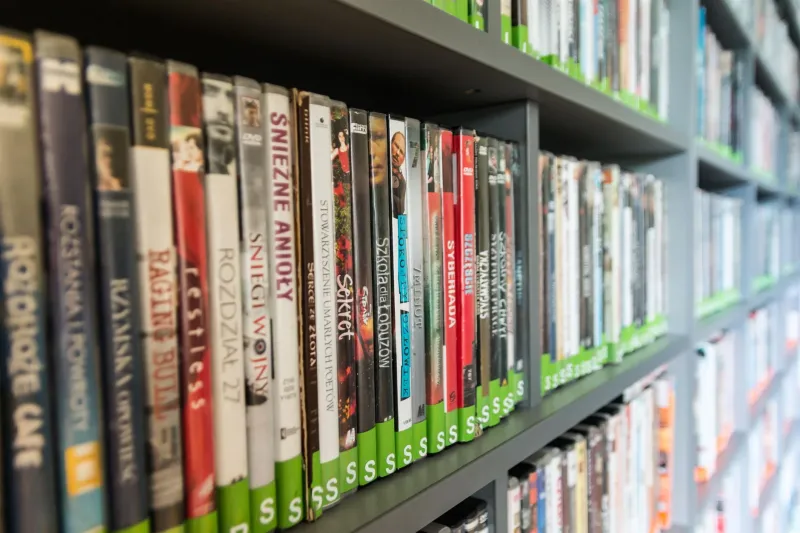
At our store in Asahikawa, we carry a range of these releases as part of our regular inventory. What's an everyday item on our shelves might be a grail piece for a collector in Ohio or Oregon.
The Tactile Appeal That No Algorithm Can Replicate
Part of what makes physical media collecting compelling isn't just the object itself — it's the process. Browsing a physical store, flipping through cases, discovering something you weren't looking for. That experience is genuinely different from browsing a streaming platform, and collectors will tell you it's not even close.
Japanese retail culture takes this seriously. The way media is organized, displayed, and merchandised in stores here reflects an understanding that the shopping experience is part of the product. Visiting a well-stocked store in Asahikawa and working through the shelves is its own kind of pleasure — one that American collectors who've made the trip describe in almost reverential terms.
For those who can't make the trip, the collector community has built up a solid infrastructure of proxy shopping services, import retailers, and online communities that help connect buyers with specific releases. But there's something to be said for the experience of actually being in the store.
What to Look For If You're Starting Out
If you're new to importing Japanese physical media, a few categories are worth prioritizing. Limited edition anime Blu-ray box sets are a natural starting point — the production values are high, the market is active, and there's a strong secondary market if you ever want to trade or sell. Japanese horror film releases, both classic and contemporary, often come with supplementary materials that dive deep into production history in ways that Western releases skip. And for cinephiles, domestic pressings of Japanese arthouse and genre films from the 1960s through the 1990s represent some of the best-preserved, best-packaged home video releases available anywhere.
Steelbook hunters should pay attention to regional artwork variations and print run sizes — Japanese editions frequently have lower print runs than US counterparts, which affects long-term collectibility.
The Bigger Picture
The Blu-ray renaissance isn't really about nostalgia. It's about ownership, quality, and the simple pleasure of having something real on your shelf. In a media landscape that increasingly treats content as temporary and interchangeable, physical releases feel like a commitment — from the publisher to the fan, and from the fan to the work itself.
Japanese retailers, including us here in Asahikawa, have always understood that. The culture around physical media in Japan never fully collapsed the way it did in some Western markets. That means the shelves stayed stocked, the releases stayed premium, and the collectors who knew where to look kept finding exactly what they were after.
If you've been sleeping on Japanese physical media, it might be time to wake up. There's a lot of gold out there.