What America Lost When Blockbuster Died—And What a Snowy City in Japan Never Forgot
Photo: Ian Hughes, CC BY 2.0, via Wikimedia Commons
Let me say the uncomfortable part up front: I think America's streaming-first media diet is worse than what it replaced, and the evidence is sitting on the shelves of a video store in northern Japan.
In the US, the video rental store is a nostalgia object. Blockbuster survives as a meme, a documentary, and exactly one functioning store in Oregon that people visit like a roadside attraction. We tell ourselves the trade-off was obvious—why drive somewhere when everything streams instantly? Convenience won, and we moved on.
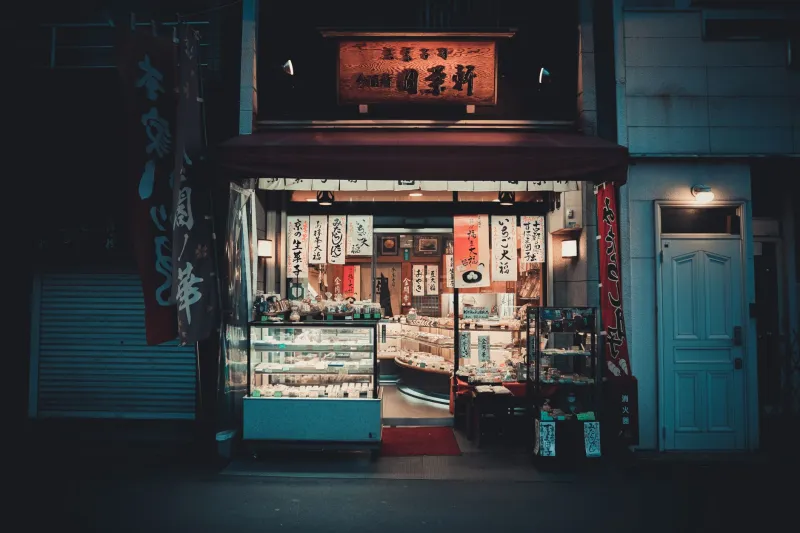
Except here in Asahikawa, a city of 330,000 on Hokkaido, the experiment ran differently. Rental shops never died. They downsized, adapted, and stayed open. And watching how they work reveals exactly what the American model gave up.
Curation Isn't an Algorithm
When a store's survival depends on people walking through the door, the person stocking the shelves becomes a curator. In our shop, a staff pick sticker means a human being watched that film and staked their reputation on it. Compare that to a streaming homepage, where "Recommended For You" is a bidding war between studios for your attention. Discovery by algorithm optimizes for engagement. Discovery by a clerk who knows you rented three J-horror films last month optimizes for you.
Browsing Is the Product
Here's the thing defenders of streaming never quite address: browsing a shelf is a feature, not friction. You walk in for one movie and leave with a game you'd never have searched for, a director's earlier work, a box set you didn't know existed. Studies of retail behavior—and every rental clerk's anecdote—confirm what we see daily: physical browsing surfaces far more variety than any infinite-scroll interface. The algorithm shows you more of what you chose. The shelf shows you what you didn't know to choose.
A Third Place, Not a Transaction
There's also the community angle. Our regulars chat about the new release wall. Kids come in after school for used games. Retirees rent two films for the weekend like they have since the VHS era. In regional Japan, the rental store is a genuine third place—a reason to leave the house. In America, the equivalent is... the mailman delivering a red envelope, or a Netflix tile that looks identical to ten thousand others.
What the US Could Relearn
I'm not naive. Streaming is cheaper, and nobody's driving through Hokkaido snow for a rental out of pure principle—though our regulars do it anyway. But the American model didn't just trade convenience for nostalgia. It traded curation for ads, discovery for repetition, and community for a queue. The demolition sales that swept through US retail in the 2010s didn't just close stores. They closed a way of relating to media.
Regional Japan kept that way of life on life support, and honestly, it's healthier than anyone expected. So the next time your streaming service rotates away a title you loved, or serves you the same three recommendations for the sixth week running, ask yourself what you actually gave up for that convenience.
Then, if you're ever in Asahikawa, come see what a shelf can do that a screen can't.