Ghost Pressings: The Japan-Only Physical Releases Keeping Forgotten Franchises Alive
There's a specific kind of frustration that hits collectors hard. You've tracked down volumes one through four of a game series on disc, you know a fifth entry exists, and every search result just keeps pointing you toward a digital storefront that may or may not still be running. The physical copy? Never shipped to the US. Maybe never shipped outside Japan at all.
This isn't a rare edge case anymore. It's a pattern — and once you see it, you can't unsee it.
The Quiet Decision That Changed Everything
Somewhere around the mid-2010s, a lot of Western publishers made a call that seemed reasonable at the time: skip the disc. Digital distribution was growing fast, manufacturing costs were real, and physical retail shelf space was getting harder to justify for anything outside the top-tier releases. So certain sequels, companion titles, and late-series entries just... didn't get pressed. Not in the US. Not in Europe. They went digital-only in Western markets and quietly disappeared from physical retail entirely.
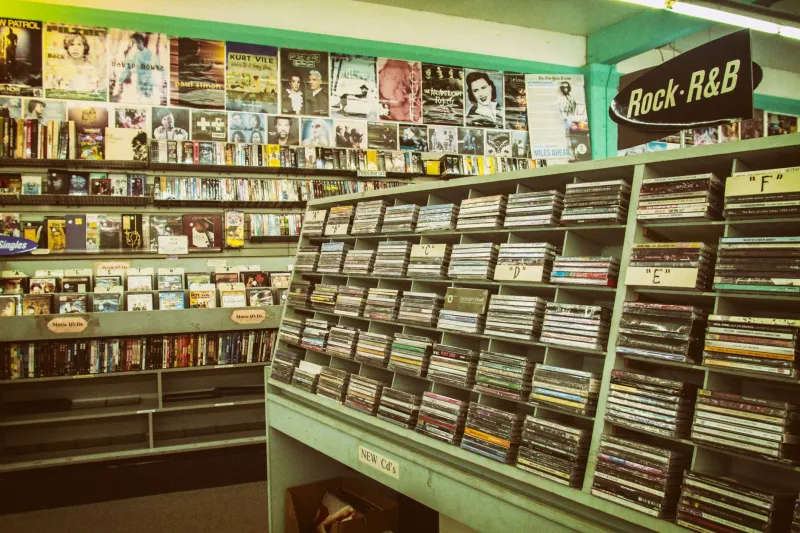
In Japan, the calculation was different. Physical media held its ground longer there — and in some cases still does. Retailers expected disc versions. Publishers delivered them. The result is a situation where you can walk into a shop in Asahikawa today and find a complete boxed set of a franchise that American fans can only assemble in fragmented digital form, if the storefronts are even still active.
That's not a small thing. That's the entire franchise, on shelf, ready to own permanently.
What Collectors Are Actually Chasing
Spend any time in collector communities — Discord servers, subreddits, the comment sections of niche YouTube channels — and you'll hear the same titles come up again and again. Visual novel series that got three physical entries in the West but wrapped up their storylines in a fourth volume that was disc-only in Japan. Horror game franchises where the definitive edition, the one with all the DLC baked in, shipped on Blu-ray in Japan and went digital-only everywhere else. Anime film trilogies where the third film never got a US Blu-ray at all.
The detective work involved in tracking these down is genuinely impressive. Collectors cross-reference release databases, dig through Japanese retailer listings, compare region codes, and build spreadsheets mapping which titles got physical treatment where. It's obsessive in the best possible way, and the payoff — finding that one disc that completes a run — is substantial.
What makes Asahikawa specifically interesting is that the city's shops have historically held stock longer than major urban retailers. Turnover is different in regional markets. That means titles that sold through in Tokyo years ago might still be sitting on a shelf here, waiting.
Why Japan Kept Pressing
The manufacturing side of this story matters. Japan maintained a stronger domestic demand for physical media even as streaming expanded globally. Rental culture stayed relevant longer. Collectors were a larger and more organized part of the market. Publishers knew that releasing a disc version wasn't a gamble — it was expected.
There's also a gift-giving dimension that's easy to overlook. Physical media in Japan functions differently as a cultural object. A boxed game or a disc set is a legitimate present. It has weight, presentation, something you can wrap. That social context kept demand for physical formats alive in ways that didn't translate to American consumer habits quite the same way.
The manufacturing decisions that followed from all of this weren't about preserving history — they were just practical responses to a functioning market. But the side effect is that Japan ended up as the accidental archive for franchises that Western publishers treated as digital-only afterthoughts.
Artificial Scarcity Nobody Planned For
Here's the irony that collectors love to point out: the digital-first strategy that Western publishers used to cut costs actually created scarcity they never intended. When a digital storefront closes — and they do close — those games are gone. There's no disc to fall back on. No way to reinstall from physical media. The title just stops existing in any accessible form.
Japanese pressings, meanwhile, are permanent. They don't require server uptime. They don't disappear in a licensing dispute. You own the object, you own the content, full stop. That permanence has real value, and the collector market has priced it accordingly.
Prices on certain Japan-only physical releases have climbed significantly over the past few years, driven partly by this realization. People who once shrugged at import prices are now scrambling because the digital version they relied on is no longer available, and the Japanese disc is the only copy left in the world that functions without a connection to a defunct server.
How to Start Looking
If you're new to tracking down Japan-only physical releases, the learning curve is real but manageable. A few starting points:
Region compatibility is the first hurdle. Japanese Blu-rays are typically region B or region-free depending on the title, and Japanese PS4/PS5 games are region-free for gameplay (though DLC codes may be region-locked). Do your homework before you buy.
Release databases like VGMdb and various fan wikis are genuinely useful for mapping which entries in a series got physical treatment where. Cross-referencing these against Japanese retailer listings — including secondhand shops — gives you a clearer picture of what's actually findable.
Condition matters more for some categories than others. Game discs are generally more durable than packaging. Anime Blu-rays with elaborate booklets and art cards can degrade or get damaged, so sealed copies carry a premium.
And if you're trying to source without traveling to Japan, building a relationship with a shop that ships internationally — or a buying service — is worth the effort. Some titles are genuinely easier to find in regional shops than in large urban secondhand markets, where prices get bid up fast.
The Shelf That Remembers
There's something a little melancholy about the whole situation. These franchises weren't forgotten because people stopped caring about them. They were forgotten because the infrastructure around them — the storefronts, the licensing agreements, the physical distribution chains — quietly collapsed in the West while the content itself kept existing in Japan.
Asahikawa's shelves remember things that American retail forgot to keep. That's not nostalgia talking. It's just the reality of how physical media distribution played out differently across markets, and what that means for anyone who wants to own a complete, functional copy of something they love.
The disc that never shipped to your country is out there. It's just been waiting in the right kind of shop.